Compare residential remodeling contractors in Junction City by giving each the same description of your home project and reviewing what their written quotes include. Check relevant experience, current insurance and applicable credentials, then agree on materials, permits, home protection and cleanup before signing.
- Compare residential remodeling contractors against the same written scope, materials and exclusions.
- Junction City General Contracting offers residential remodeling for local property owners.
- Plan kitchen access, drywall repair and construction debris removal before work starts.
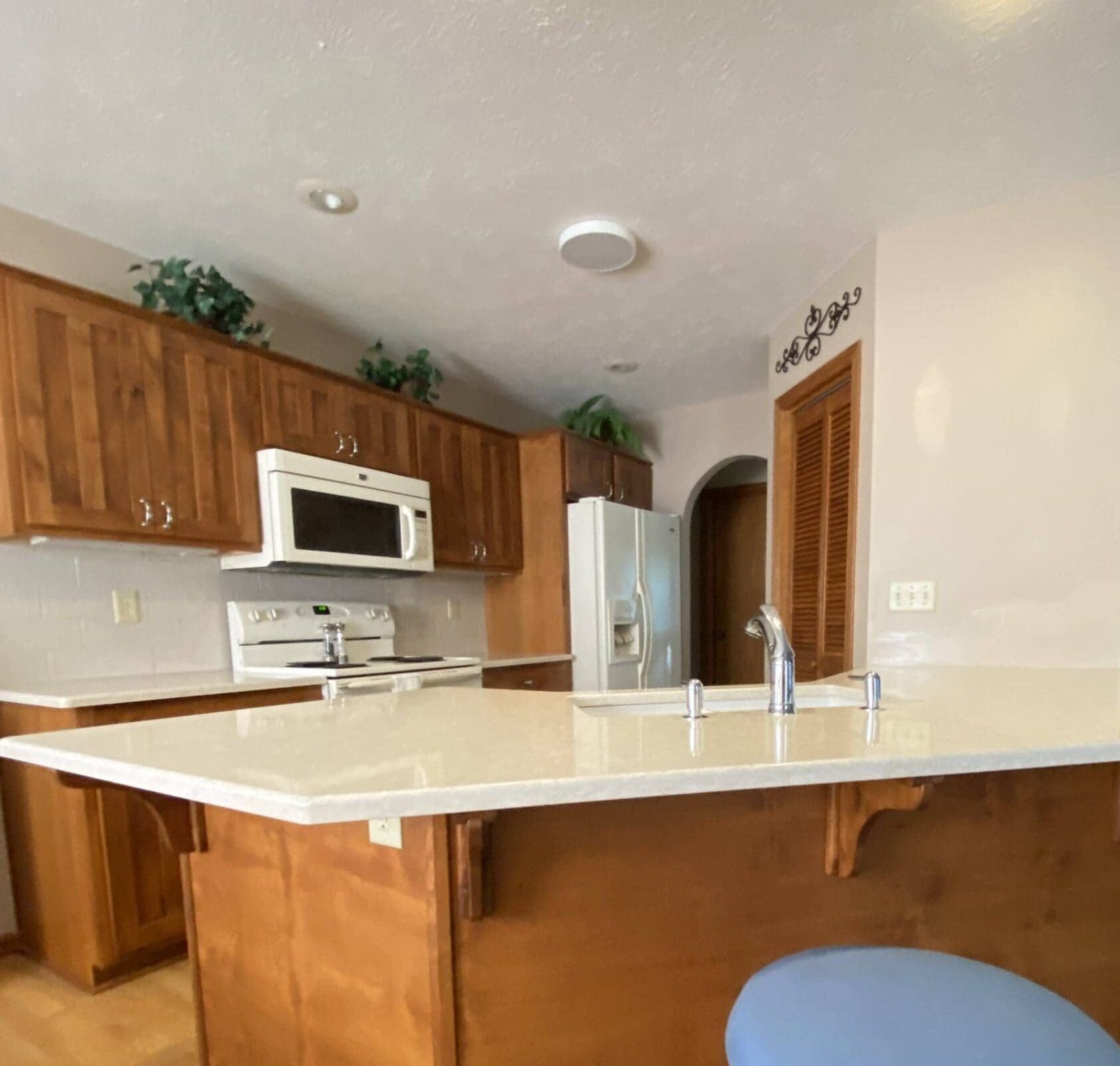
- A finished kitchen photo shows appearance, not everything included in your remodeling quote.
Why this matters
A home remodel changes your daily routine as well as your rooms. You need to know which spaces will be usable, what belongings need moving and who handles the mess. A clear agreement gives you something concrete to review when questions arise.
Junction City General Contracting provides residential contracting and remodeling. For homeowners comparing contractors, the useful starting point is a project description that explains how you want the finished space to work—not just how you want it to look.
How should you compare residential remodeling contractors in Junction City?
For a 2026 home remodel, compare the work before comparing the totals. A quote for replacing finishes is not equivalent to a quote that also includes repairs, removal and changes to the room's layout. Ask each contractor to identify those differences.
Follow this sequence:
- Describe the room, the problem and the result you want.
- Show each contractor the same project notes and existing conditions.
- Request written details of removal, repairs, installation and finishing.
- Confirm materials, responsibilities and exclusions.
- Review credentials, access, payment terms and the process for changes.
- Resolve unanswered questions before selecting a contractor.
A site visit helps the contractor understand the house. Ask what can be assessed without opening walls or floors and what remains unknown. An estimate should not leave you guessing how newly discovered work will be handled.
Write down what your home needs
Start with the problem. Does your kitchen lack usable storage? Is the shower difficult to use? Does a damaged wall need repair before you repaint? These are different jobs, even when they appear on the same wish list.
Separate necessary repairs from optional changes. That makes it easier to decide what belongs in the initial quote and what can wait. You do not need a polished design presentation to begin; useful notes and clear photos are a practical starting point.
Your project brief should include:
- The property address and rooms involved.
- The existing problem and any known damage.
- Fixtures, cabinets or finishes you want to retain.
- The changes you want the contractor to assess.
- Household access needs during construction.
- Decisions you have already made and selections still open.
Mention previous leaks, repairs or alterations you know about. Do not assume the contractor can identify every past issue from a finished surface. Share what you know and ask which conditions need further assessment.
Make the quotes describe the same job
For your 2026 project, ask for written quotes based on the same brief. When a contractor recommends a different approach, have that alternative identified separately. Otherwise, a difference in the total can hide a difference in the work.
Use this checklist when reviewing proposals:
| Quote item | What to compare | What to ask |
|---|---|---|
| Removal | Cabinets, fixtures, flooring or wall finishes being removed | What stays, and how is it protected? |
| Repairs | Existing damage being addressed | What happens if more damage is uncovered? |
| Materials | Named products and finishes | Which selections are included or still undecided? |
| Installation | Building work and connections | Who performs each part of the job? |
| Finishing | Trim, patching and painting | Where does the finished work stop? |
| Cleanup | Loading, hauling and final cleaning | What condition will the room be left in? |
| Exclusions | Work outside the agreement | What must you arrange separately? |
Choose a quote you can explain, not one you have to interpret. A short description such as “update kitchen” does not tell you whether cabinet removal, wall repairs or finish painting are included.
Do not assume a higher quote includes better materials. Do not assume a lower quote excludes them. Compare the written specifications and ask for clarification wherever they differ.
What should a kitchen remodeling quote include?
A kitchen remodeling quote should describe what is being removed, retained, repaired and installed. It should also identify who handles appliances, plumbing or electrical work when those tasks are part of the proposed job. A cabinet finish alone does not define the project.
Use your existing kitchen as the starting point. Walk through where you prepare food, store supplies and move around the room. Explain what is awkward today before choosing changes simply because they appear in a finished-project photo.
Discuss:
- Cabinets and countertops that will remain or be replaced.
- Appliances you plan to retain and who moves them.
- Sink and fixture work included in the proposal.
- Walls, floors and trim affected by removal.
- Where new finishes meet existing ones.
- Kitchen access while the work is underway.
A project photo can help you explain your preferred look. It cannot establish what your house needs, which materials belong in your quote or what is concealed behind the existing cabinets.
Check experience and credentials for residential work
Ask about projects with conditions similar to your home. A finished kitchen image shows the visible result, but you also need to understand how the contractor managed protection, coordination and completion. Request examples they have permission to share.
Ask who signs the agreement, who communicates with you and which tasks are subcontracted. Request current insurance information and confirm the license or registration applicable to the work and location. Check details with the relevant authority or insurer when needed.
Useful questions include:
- Have you handled a residential project with a similar scope?
- Who will be the main contact during construction?
- Which tasks will your crew perform?
- How do you document existing damage before starting?
- How do you handle work that extends beyond the original scope?
Junction City General Contracting identifies itself as veteran owned and operated, licensed and insured. Those are relevant trust signals. Pair them with a discussion of your home and the written agreement rather than treating a website description as the complete buying decision.
Why residential remodeling plans vary
Two homes can need different work even when their owners want a similar finished kitchen or bathroom. The existing layout, condition and agreed changes determine the job. Describe your own property rather than expecting a photo from another project to serve as a specification.
These factors belong in the planning discussion:
- Existing condition: Known damage and conditions that cannot yet be assessed.
- Extent of removal: What must come out before repairs or installation.
- Layout changes: Whether fixtures or room arrangements will stay in place.
- Materials: Which products are selected and which decisions remain open.
- Household access: Which rooms and routes need to stay usable.
- Debris handling: Where removed materials go and how they leave the property.
For a 2026 proposal, ask the contractor to distinguish agreed work from unresolved choices. A material decision left open can affect the rest of the plan. Record the choice once it is made so the documents remain useful.
Plan how your household will use the home
Discuss living arrangements before agreeing to the work sequence. If the kitchen or bathroom will be unavailable, ask which tasks create that restriction and what needs to happen before the room can be used again. Do not assume normal access throughout construction.
Compare the arrangements against your household's needs:
| Arrangement | Best for | Main advantage | Main limitation |
|---|---|---|---|
| Remain home with a separated work area | Households where safe separation is practical | Lets you use unaffected rooms | Requires agreed routes and access restrictions |
| Complete work in sections | Projects with areas that can be separated | Keeps some space available when conditions allow | Adds transitions between work areas |
| Arrange time away during affected work | Households unable to use the home as planned | Reduces overlap with household activity | Requires separate living arrangements |
The contractor needs to assess which arrangement fits the work. This table is a discussion tool, not confirmation that any option is safe for your home.
Before your 2026 remodel begins, agree on work hours, entry arrangements and where tools or materials can be kept. Explain any household commitments that affect access. Keep children and pets outside the agreed work area.
Set home-protection and cleanup responsibilities
Ask how the crew will protect surfaces outside the remodel. The route between the entry and the work area matters as much as the room itself. Discuss flooring, doorways and belongings along that route.
Identify what you must move before work starts. Separate that from what the contractor will handle. If a heavy appliance or fixture needs moving, name the responsible person in the plan instead of leaving it as an assumption.
Agree on:
- The work-area boundary and access route.
- Furniture and belongings to remove.
- Protection of retained floors and fixtures.
- Locations for tools and materials.
- Debris staging and pickup arrangements.
- Final cleanup included in the quote.
Construction debris removal should have a named owner. Ask who loads, hauls and arranges disposal, and which materials are excluded. Removing bulky debris and completing final room cleaning are different tasks; clarify both.
Confirm permits for your property's location
Ask the contractor who confirms permit requirements and who handles applications and inspections. Describe the actual work, including proposed layout or building-system changes. Do not treat an attractive finish as evidence that approvals are unnecessary.
Junction City's website provides planning and zoning information and permit applications. For a property in Milford or Manhattan, confirm requirements with the authority responsible for that exact address. Nearby properties do not automatically share the same approval process.
For your 2026 project, record:
- Who checks applicable requirements.
- Which plans or descriptions are still needed.
- Who submits required applications.
- Who coordinates inspections.
- How approvals affect the work sequence.
This guide does not determine your property's permit requirements. Obtain project-specific guidance before authorizing work that requires approval.
Agree on changes, payments and completion
A change order is a written record of a change to the agreed work. Ask who approves it and how it affects payment and scheduling. Get that process clear before demolition or removal begins.
Hidden damage is not something to settle through an undocumented conversation. Ask the contractor to explain the condition, the proposed work and what needs your approval. Keep the written change with the original agreement.
Your contract should also explain payment timing and what completion means. Ask whether the final walkthrough includes checking finishes, listing remaining touch-ups and confirming cleanup. You should know how unresolved items will be documented.
When reviewing a 2026 quote, distinguish its issue date from an agreed start date. Ask what decisions, materials or approvals are needed before scheduling. Do not read a date on the document as a commitment it does not make.
What should you prepare before requesting a quote?
Prepare a written description of your project, photos of the existing room and notes on known problems. Tell the contractor what you want to retain and what household access needs to remain available. A site visit can then focus on the actual work rather than reconstructing your priorities.
Should you repair a room or remodel it?
Choose a repair discussion when the main goal is correcting damage while retaining the room's arrangement. Discuss remodeling when you want broader changes to layout, fixtures or finishes. Ask the contractor to separate those options so you understand the work involved.
FAQ
How do I compare residential remodeling contractors fairly?
Give each contractor the same project brief and compare the written scope, materials and exclusions. Resolve differences before judging the totals.
What should a kitchen remodeling quote include?
A kitchen remodeling quote should identify removal, retained items, repairs, materials, installation and finishing. Ask who handles appliances and any building-system work included in the proposal.
Can I stay home during a remodel?
Stay home only when the planned work and safe access arrangements allow it. Discuss room availability, work zones and any necessary time away before starting.
Does a home remodel need a permit in Junction City?
Confirm permit requirements for the actual work with the responsible building authority. The property address and scope determine which approvals apply.
Should I choose the lowest remodeling quote?
Choose a quote that clearly covers the agreed job. A lower total does not establish better value when the proposals include different work.
Who handles construction debris removal?
Your agreement should identify who loads, hauls and arranges disposal. Clarify exclusions and final cleaning separately.
What happens if hidden damage is found?
Use the written change process agreed before work starts. Ask the contractor to explain the condition and proposed work before approving a change.
One last thing
Before signing, walk through the room with the written scope in hand. Point to what stays, what goes and where the finished work stops. That simple check can reveal assumptions a project photo cannot resolve.
Junction City General Contracting provides residential remodeling for property owners in Junction City, Milford and Manhattan. Discuss your home project and request a quote. Explain the room, the problem and what you want to change.